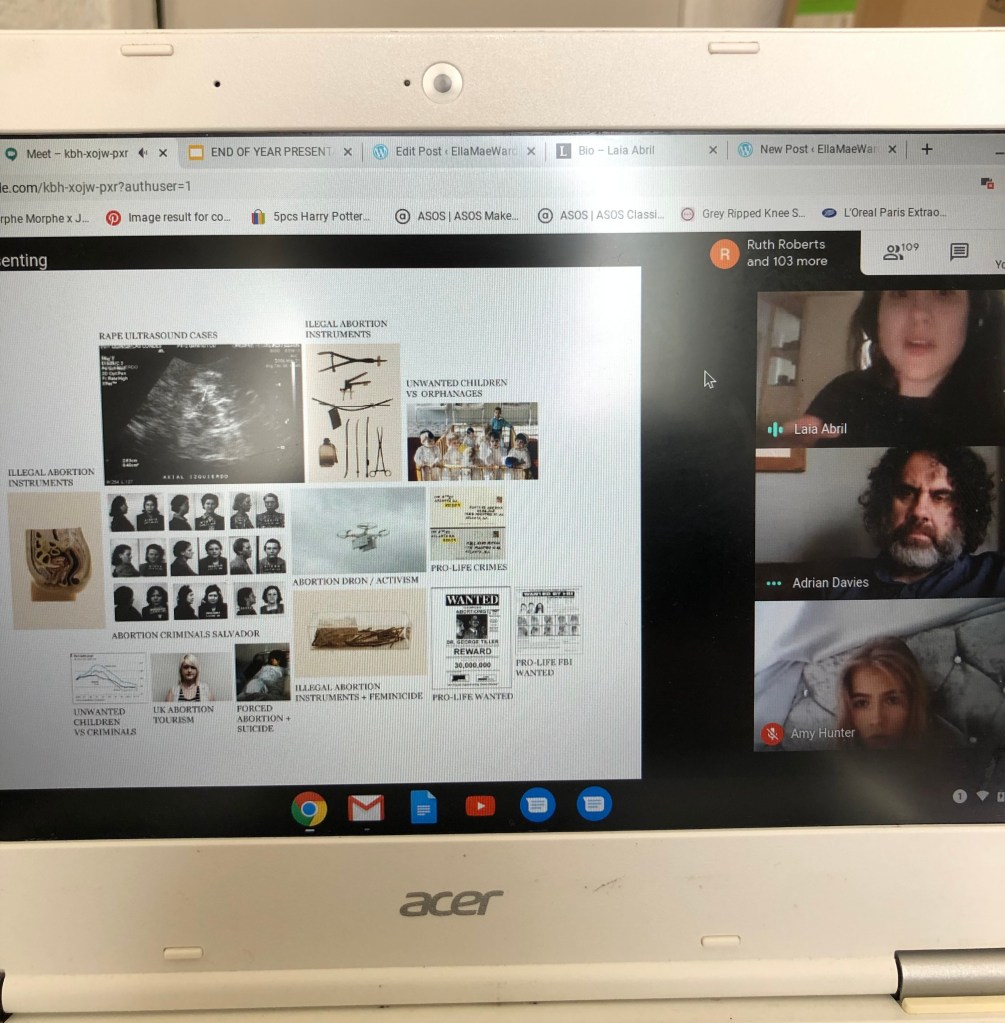

On Thursday we had Laia Abril a research based artist working with photography, text, video and sound. She presented her work and talked to us about her previous projects that focus on photography where she decided to start telling intimate stories that raise uneasy and hidden realities related with sexuality, eating disorders and gender equality. Abril has a background as a journalist which helps for her deep research into her sensitive topics but then she came into documentary photography. She tries to modify and adapt her work, seeing what worked or what didn’t in her past and present projects. Laia only recently started constructing her images, playing around with compositions and mixed media.
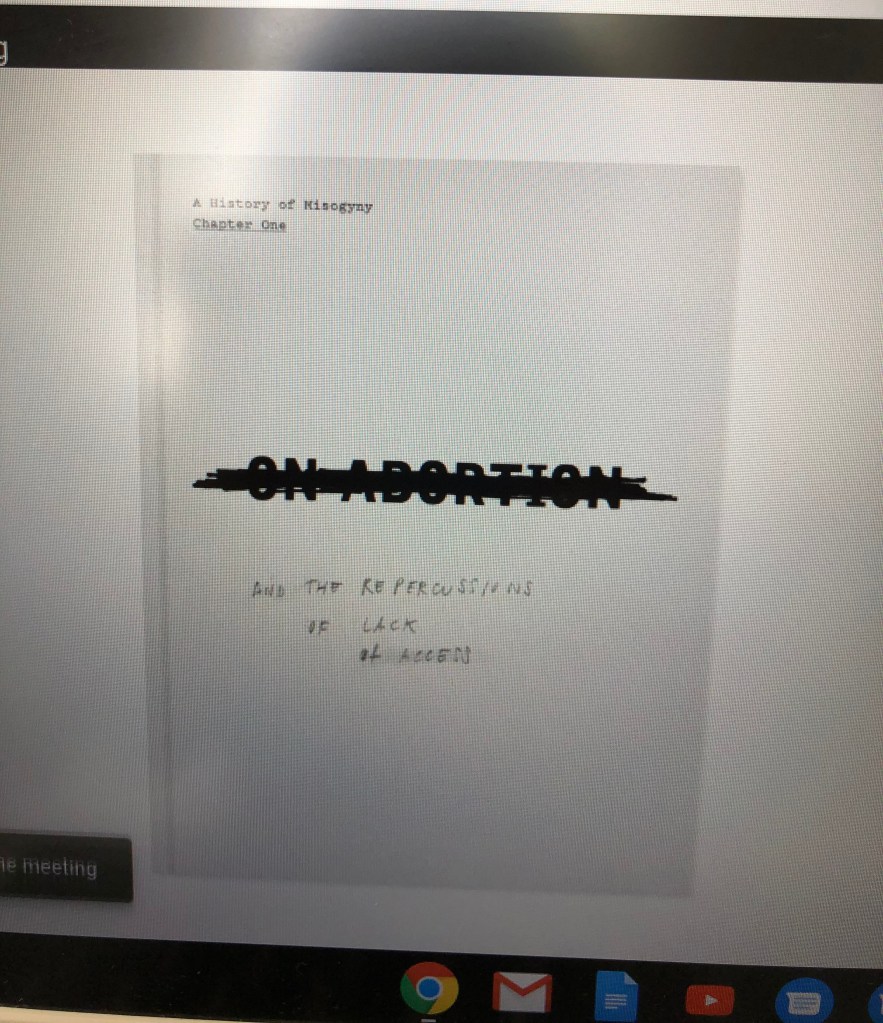
Laia Abril spoke about ‘A History of Misogyny’ a long-term project is a visual research undertaken through historical and contemporary comparisons. In her first chapter On Abortion Abril documents and conceptualizes the dangers and damages caused by women’s lack of legal, safe and free access to abortion. Continuing with her painstaking research methodology, Abril draws on the past to highlight the long, continuous erosion of women’s reproductive rights to present-day. Her collection of visual, audio and textual evidence weaves a net of questions about ethics and morality, and reveals a staggering series of social triggers, stigmas, and taboos around abortion that have been invisible until now.
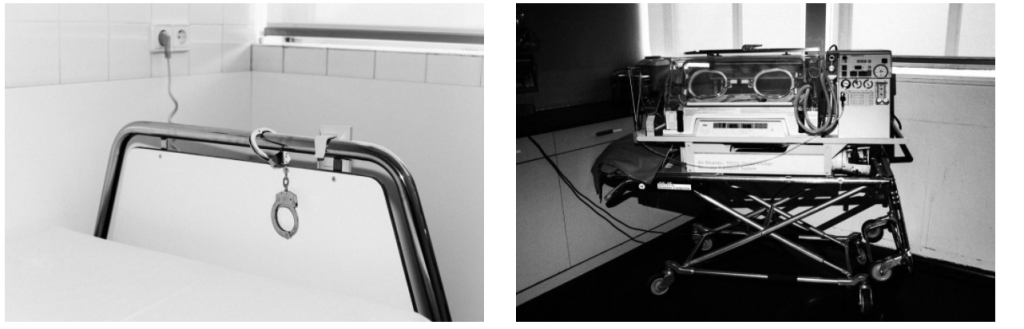
After the talk we had the chance to ask any questions we have about her craft about projects; I asked her what was her inspiration and influence to research and document such a sensitive topic. Laia said that when something touches her or leaves a mark, she feels like it’s her duty to explore it further in her creative work. Teresa Margolles a Mexican conceptual artist, photographer, videographer and performance artist ; according to Abril is an influence in the body of work she produced in 2015. Additonally, she explained that in her first chapter in ‘A History or Misogyny’ on Abortion, Laia purposely put soft images along with the shocking stories to make the book less graphic.
 EllaMaeWardpp1